






Frédéric Laforge
Tous les corps ont quelque chose à dire
2026
Samuel Graveline


Presentation of the artwork
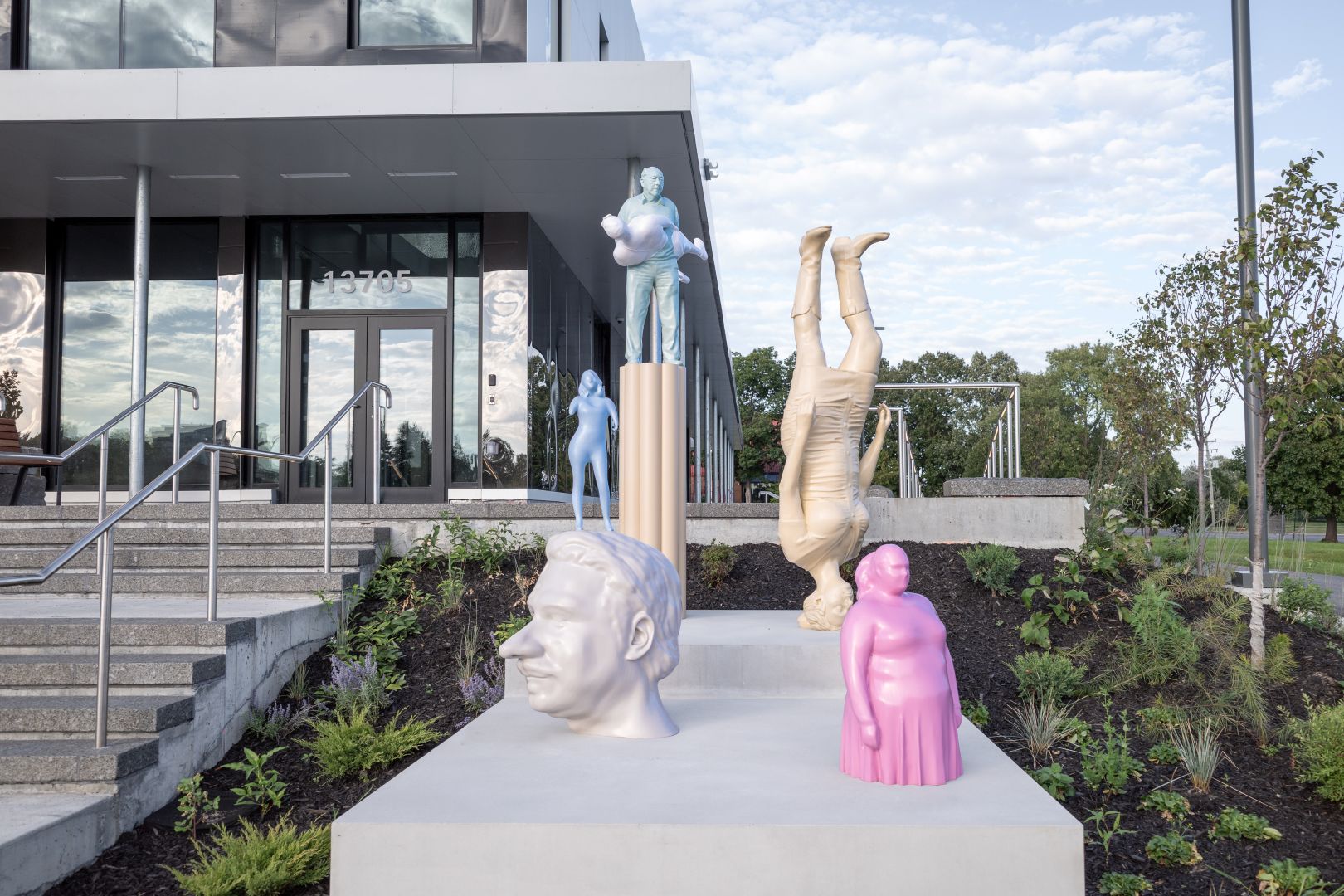
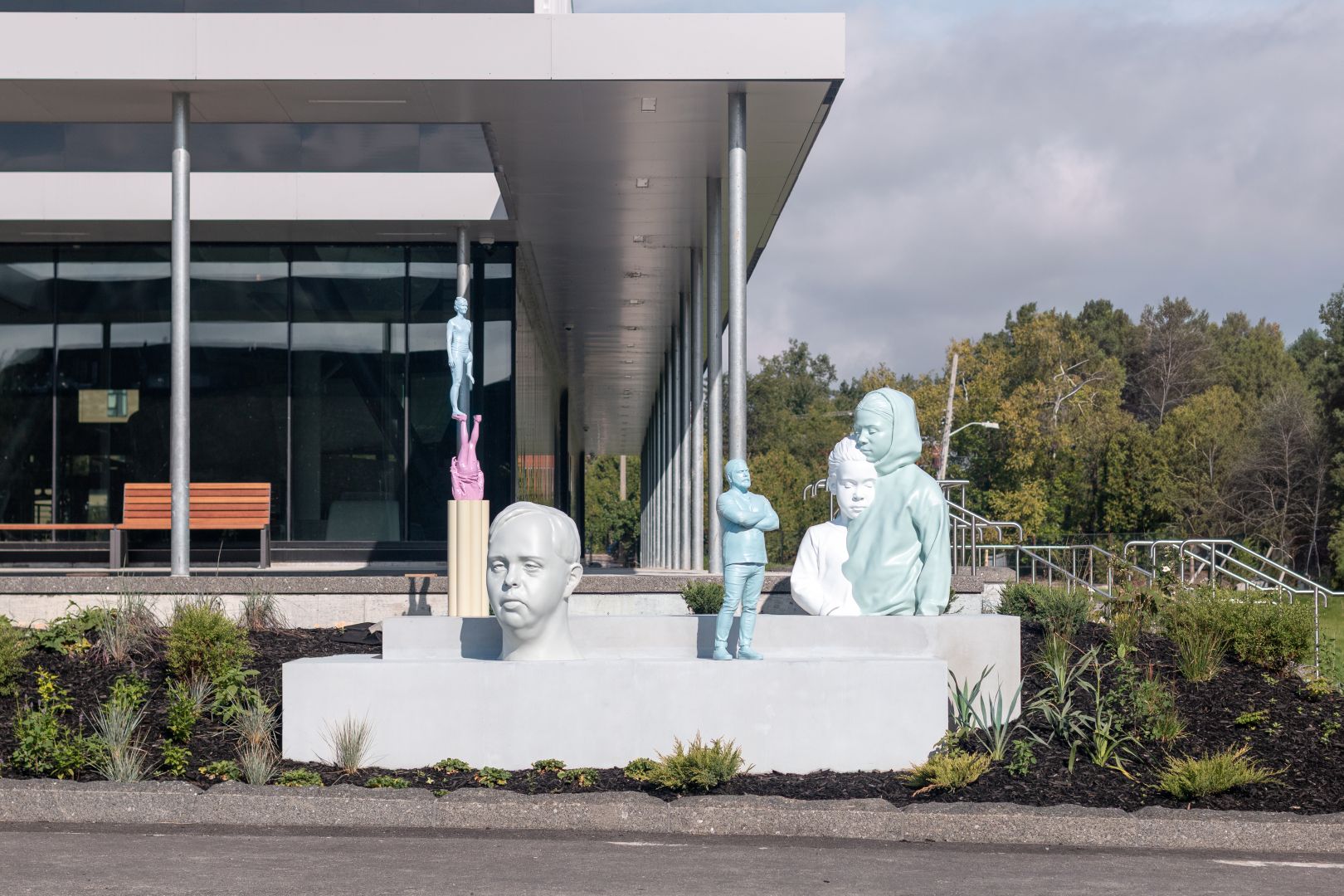
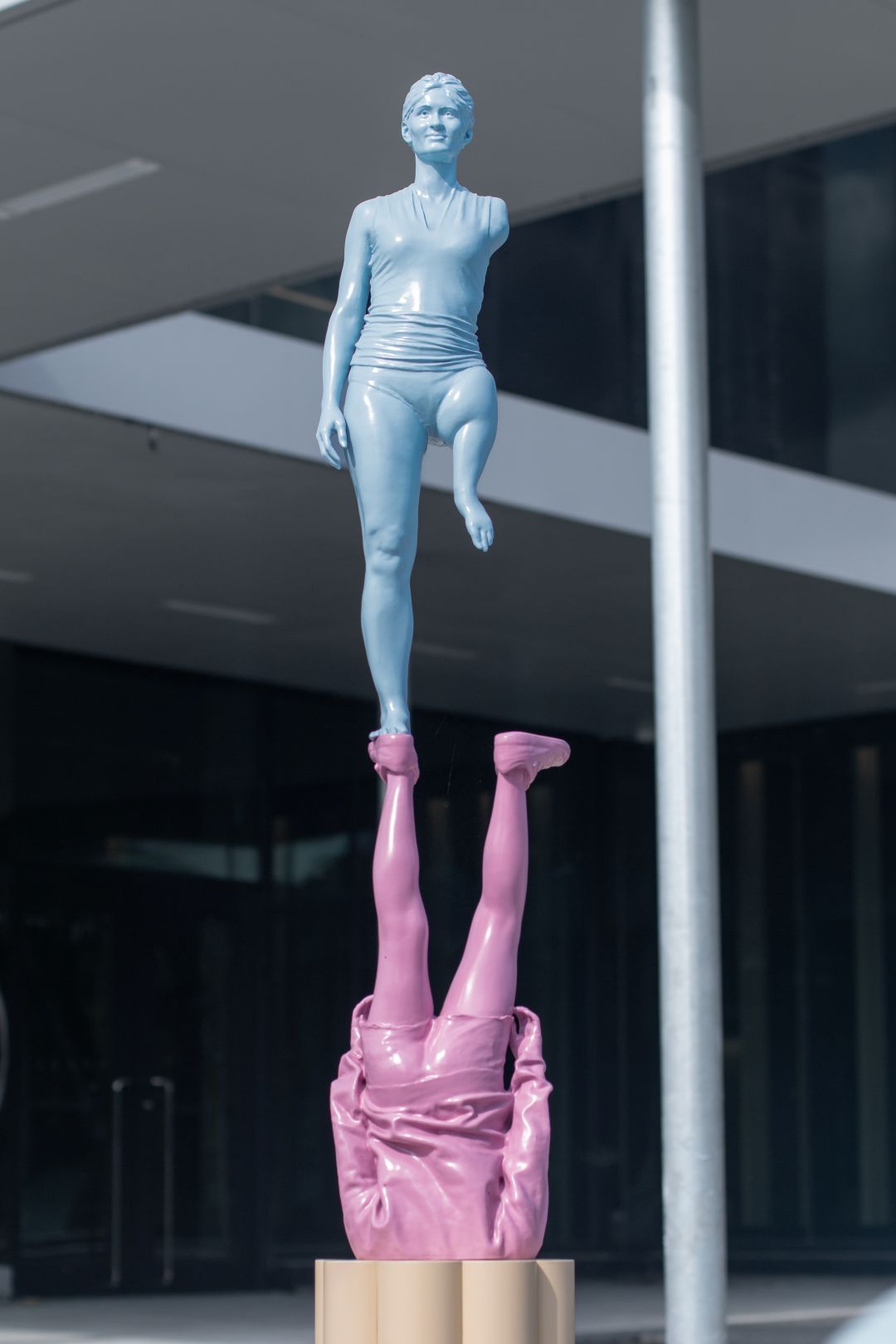
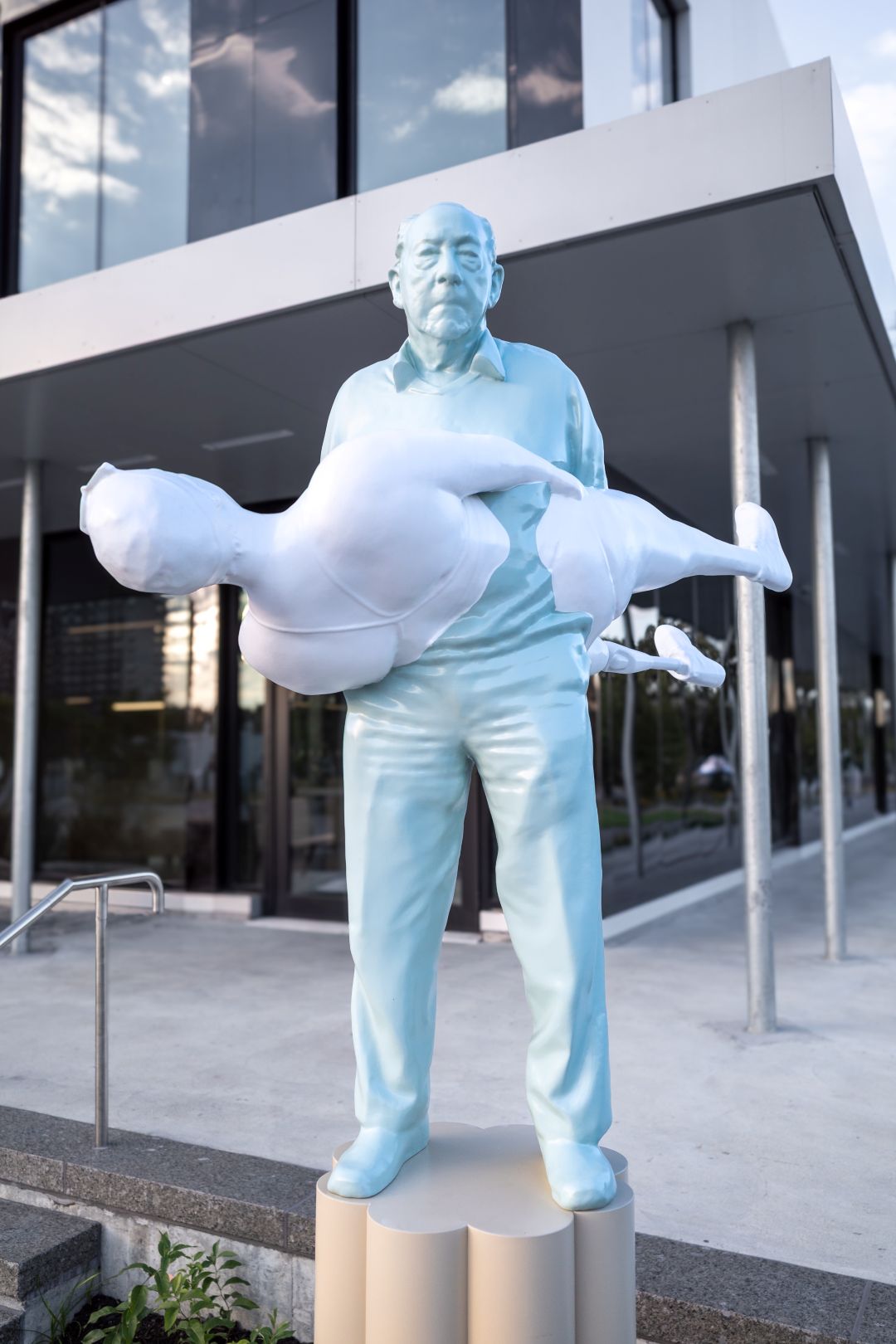
The work comprises two sculptural groupings, each with four elements, installed at the building’s two entrances. It features a number of figures of various sizes, colours, and morphologies in different positions. The figures meet, intersect, and are superimposed on or melt into each other, creating a dialogue.Some figures are fully visible, whereas others appear only from the hips or the neck, as if they were partially submerged. A few are upside down, evoking diving or aquatic games. This approach stimulates viewers’ imagination. Each grouping incorporates a flower-shaped platform that structures the composition.
The contrasting finishes on the sculptures accentuate their visual richness and suggest different kinds of presence, ranging from materiality to lightness.
The diversity of the bodies presented in the work is key: the silhouettes are corpulent or slender, the people are elderly, children, adults, and people with disabilities. This plurality, which celebrates living together, reflects that of the community along with the site’s social, recreational, inclusive vocation. Water, the fundamental theme of the project, symbolizes play, pleasure, and getting together.
Associated events
This work of public art was produced within the context of the construction project for the Pierrefonds-Roxboro aquatic complex. In compliance with the Québec government’s Politique d’intégration des arts à l’architecture et à l’environnement des bâtiments et des sites gouvernementaux et publics, the facility must include a work designed specifically for the site. Its placement outside the new aquatic complex will contribute to the vibrancy of the area, defined as the core of the borough’s identity.
Frédéric Laforge

Frédéric Laforge holds an MFA from the Université du Québec à Chicoutimi (2003) and a PhD in art studies and practices from the Université du Québec à Montréal (2016). His work has been featured in numerous solo and group exhibitions in Canada and abroad (Manif d’art – La Biennale de Québec; Museo Nacional de la Estampa, Mexico City; Vršac Biennale, Serbia). He has produced several public art projects in Canada. His works are held in private and institutional collections, including that of the Musée national des beaux-arts du Québec. He is particularly interested in issues of diversity and identity.